
2026-09-22
Blog
By Maja Magnusson, CEO of Care to Translate
AI translation is advancing extraordinarily quickly. We can now speak into a phone and hear our words reproduced in another language within seconds. Models are becoming more fluent, more natural and capable of handling more languages.
For healthcare, this creates enormous possibilities.

Language barriers remain a daily reality for healthcare professionals and patients around the world. At the same time, healthcare systems are being asked to care for more people with fewer resources. Technology that can make communication faster and more accessible deserves serious attention.
But I think we risk asking the wrong question.
We spend a great deal of time asking how good AI has become at translation. In healthcare, we should be asking something harder:
How do we make sure AI translation is safe enough for real patient conversations?
Those are not the same question.
After years of working with language barriers in healthcare, I have become increasingly convinced that the future will not be determined by which system produces the most impressive translation in a demo. It will be determined by whether we can build language support around the realities, responsibilities and limitations of healthcare itself.
One of the most remarkable things about modern AI is how convincing it sounds.
That is also part of the risk.
A sentence can be fluent, grammatically correct and completely natural while still missing clinical nuance. Uncertainty can disappear. Context can shift. A translation can sound more confident than the original statement.
In everyday conversation, those imperfections may be acceptable. In healthcare, the consequences can be very different.
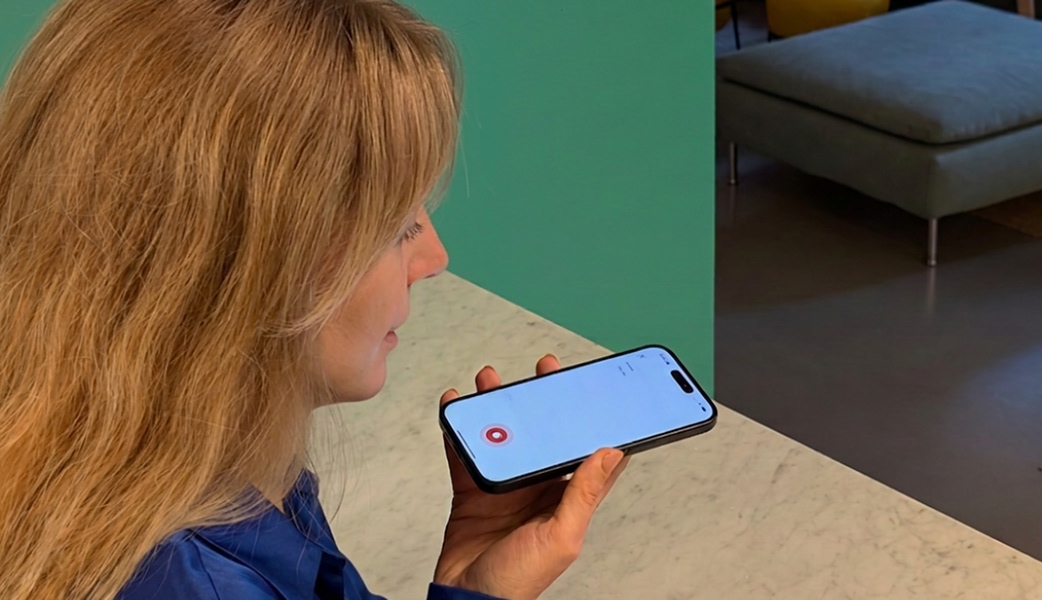
This is why I don't believe translation quality alone is a sufficient measure of whether an AI tool belongs in patient-facing care.
The relevant question is not simply, “Did the system translate the sentence correctly?”
It’s also: “Was this an appropriate way to communicate this information in this particular care situation?”
That distinction matters.
There is another assumption I think the industry needs to challenge: that the goal is eventually to make AI capable of handling every conversation.
Healthcare communication exists on a spectrum.
At one end are thousands of routine interactions that happen every day: asking about pain, explaining what will happen next, giving basic instructions, checking understanding or helping someone navigate a care environment.
Technology can remove enormous friction here.
At the other end are conversations involving complex diagnoses, informed consent, end-of-life decisions or emotionally difficult information. Context matters enormously. So do culture, emotion, ambiguity and the ability to ask nuanced follow-up questions.
The responsible question is therefore not AI or human interpreter?
It’s which form of language support is appropriate for this particular moment?
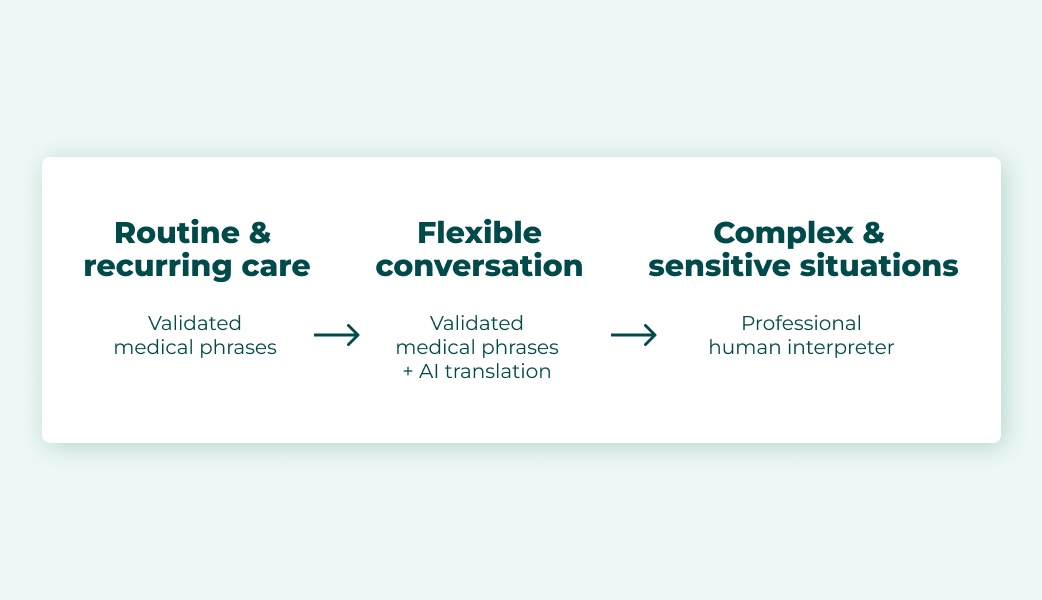
I believe the future will be a combination of AI translation, medically validated communication and professional interpreters – not one replacing all the others.
The important work now is defining the boundaries between them.
This is perhaps the distinction I believe matters most.
Much of today's AI conversation is focused on generation: how accurately and naturally can a model produce language?
Healthcare also needs to think about governance.
Many clinical conversations are surprisingly repetitive. Healthcare professionals ask the same symptom questions, provide the same preparation instructions and explain the same routine procedures thousands of times.
In those situations, there is real value in communication that has been developed for a specific medical context and validated before it reaches the patient.
AI can then complement that foundation when flexibility is needed.
This may sound less exciting than a completely open-ended AI system that promises to translate anything. But in healthcare, constraints are not necessarily a weakness.
Sometimes the safest innovation is knowing where not to automate.
There is another lesson we have learned from working with healthcare organizations: even excellent technology fails if it ignores how healthcare professionals actually work.
A nurse does not have unlimited time to navigate menus. An emergency department cannot add five new steps to a conversation. A clinician may be wearing gloves, moving between patients or communicating while performing another task.
If the approved solution is too cumbersome, people find alternatives.
This means usability cannot be separated from safety.
The safest language solution on paper achieves very little if healthcare professionals reach for a generic consumer tool instead because it’s faster.
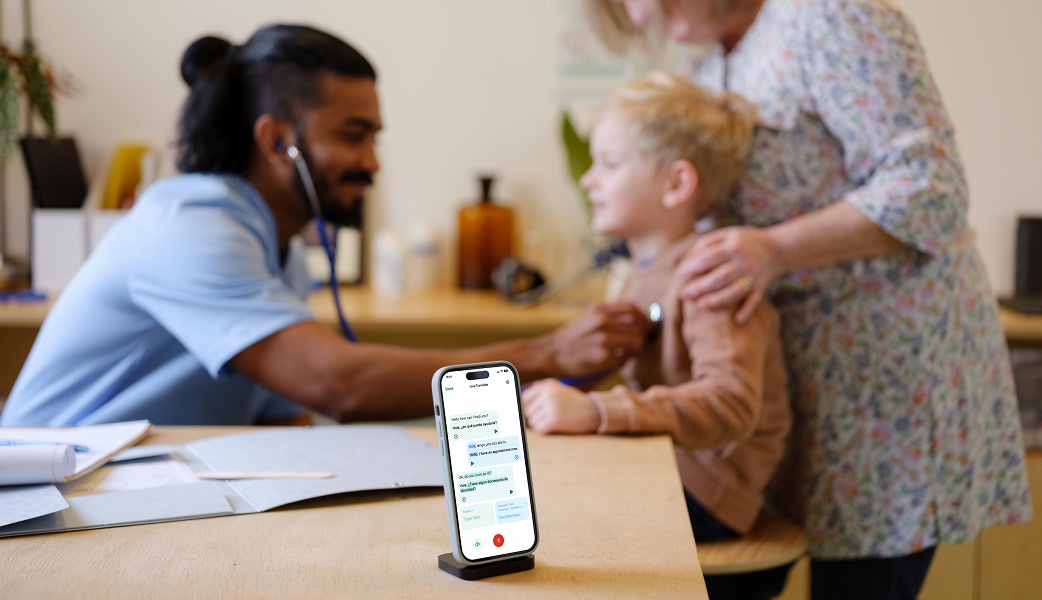
We therefore need to judge healthcare AI not only by model performance, but by what happens when the technology meets an actual ward, ambulance, clinic or care home.
Those questions deserve much more attention.
We are still in a period where simply adding “AI” to a healthcare product attracts attention.
I don't think that period will last.
Healthcare organizations will become more sophisticated buyers of AI, and the questions they ask will become harder.
Where does the data go? What happens when the system is uncertain? Which parts of the communication have been validated? What are the limitations? When should the technology not be used? How does a healthcare professional move from digital language support to a human interpreter when the situation demands it?
That is a positive development.
The healthcare AI companies that endure will not be those that make AI appear infallible. They will be those that are unusually clear about what their technology can do, what it cannot do and how it should be used responsibly.
Trust will come from transparency, not from pretending uncertainty has disappeared.
Despite these challenges, I’m deeply optimistic about what AI can do for language access in healthcare.
There are still too many moments when a patient and healthcare professional cannot understand each other immediately. Too many routine interactions are delayed because language support is unavailable. Too many healthcare professionals are forced to improvise.
AI gives us an opportunity to change that at a scale that was previously impossible.
But we should not measure progress by how much human involvement we can eliminate.
We should measure it by whether more patients can understand and be understood, whether healthcare professionals have better tools when language barriers arise, and whether technology helps us use scarce human interpreter resources where they matter most.
The ambition should not be AI translation everywhere.
It should be the right communication support, at the right moment, with the right level of safety.
That is a more difficult problem to solve. But healthcare should demand nothing less.
Maja Magnusson is CEO of Care to Translate, a healthcare technology company focused on overcoming language barriers in care