Machine translation (MT) lets you automatically translate text from one language to another – a game changer for easily understanding the world around us. And while using machine translation is easy, using it critically requires thought. Here, you can learn more about how machine translation works, and become an educated user.
Thinking about whether, when, why, and how to use machine translation (MT) is part of machine translation literacy, a term coined by researchers Lynne Bowker and Jairo Buitrago Ciro in 2019. It comes down to being an informed and critical user of the technology, rather than being someone who just copies, pastes and clicks.
Being machine translation literate means considering:
✅ Asking simple questions
✅ Explaining basic instructions
✅ Patient registration and intake
✅ Providing practical information
Example: "Do you have an appointment?"
❌ Long sentences
❌ Medical reasoning and explanations
❌ Idioms and figurative language
❌ Complex instructions
Example: "We need to consider pharmacological treatment to manage your symptoms."
Do a simple 3-step check:
Example:

This blog post is based on the Machine Translation Literacy project infographics developed by Professor Lynne Bowker.
Read more
Machine translation (MT) has revolutionized how we access and understand content across languages. But how do we know when it’s safe to rely on these tools?
Read more
This is a question we get a lot. Here we compare Google Translate with Care to Translate and its abilities when used in a healthcare setting.
Read moreRECORDED WEBINAR
Using machine translation is easy. But using it critically requires thought. In this webinar, we will deep dive into whether, when, why, and how to use MT. Guest speaker: Lynne Bowker, Professor specializing in machine translation literacy.
Live translate
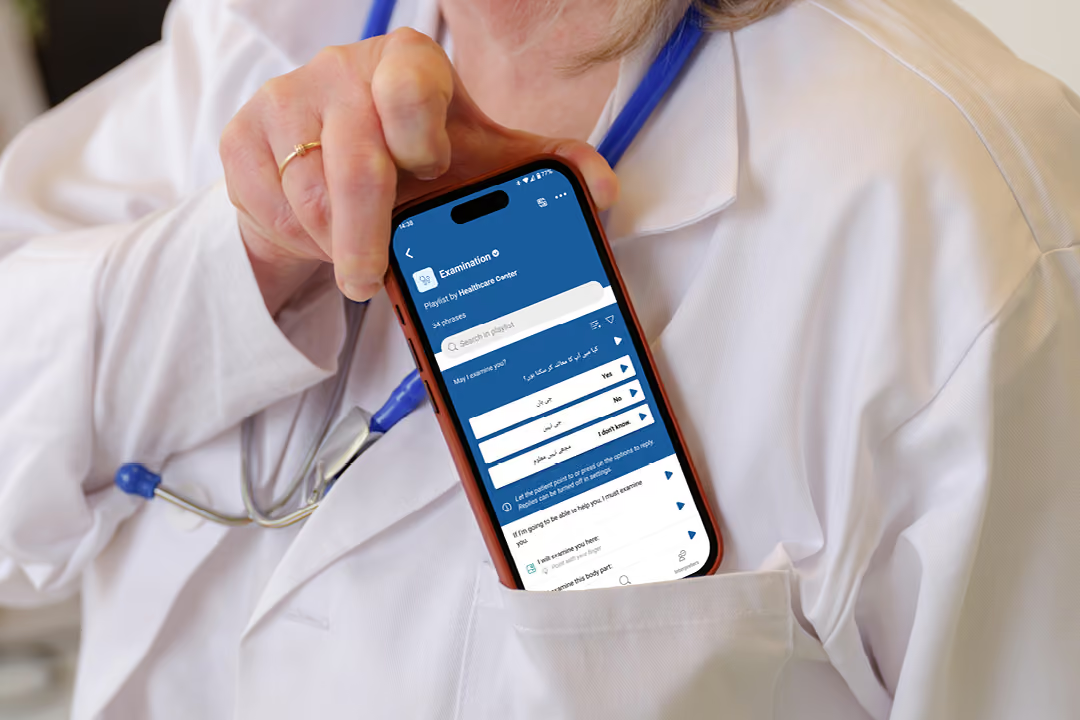
Live Translate enables real-time speech-to-text, text translation, and text-to-speech, making multilingual patient conversations smoother than ever. Unlike most generic translation tools, Live Translate is built specifically for health care. It uses neural machine translation to provide the best possible output and lets you adjust your input, quality-check the output, and block translation results based on an accuracy score.
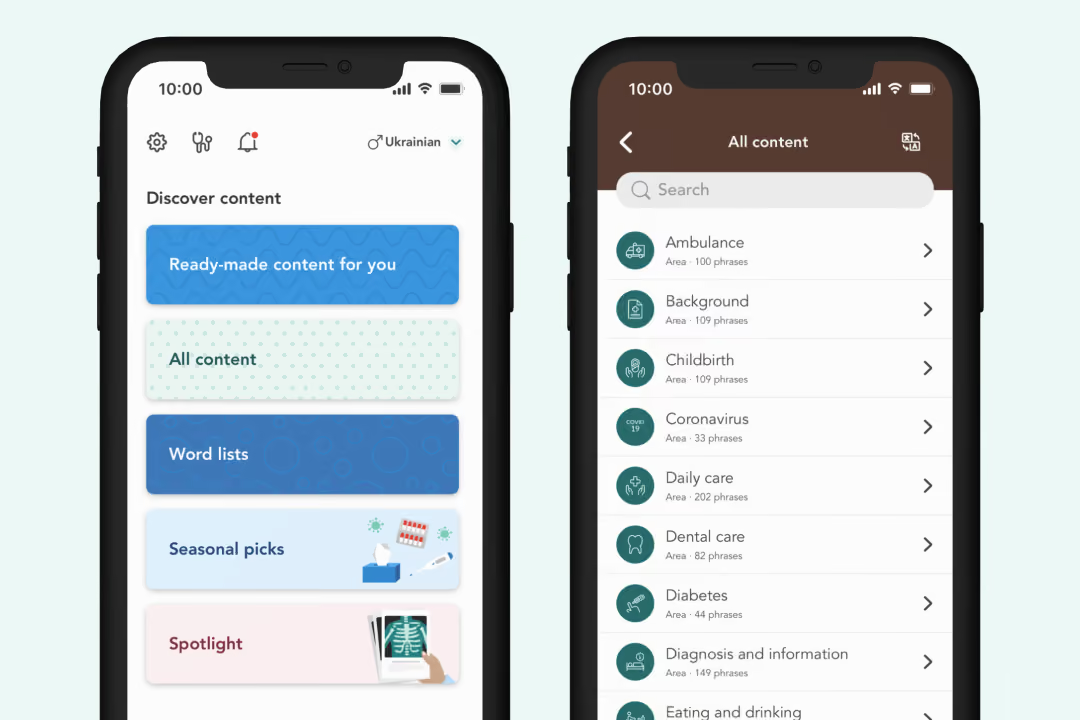
phrase library
Unlike free-form machine translation, a medical phrase library ensures consistency. You can quickly search through the library to find the right pre-translated (by a human) phrase and instantly render it in the supported language. By standardizing and streamlining communication, medical phrase libraries help reduce misunderstandings, improve patient safety, and make it easier to share critical medical information across languages.
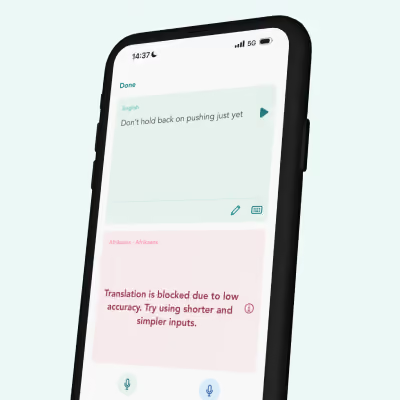
Block machine translations when accuracy isn’t estimated to be high enough.
Learn more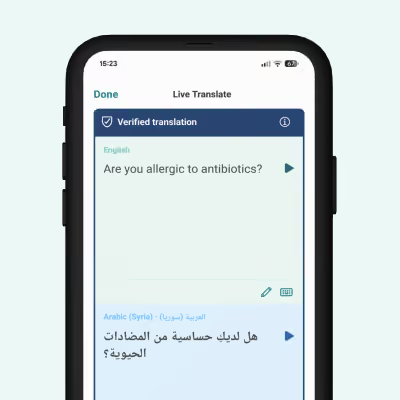
When you enter a text that matches a phrase in the verified phrase library, the verified translation will be used instead of the machine translation.
Learn more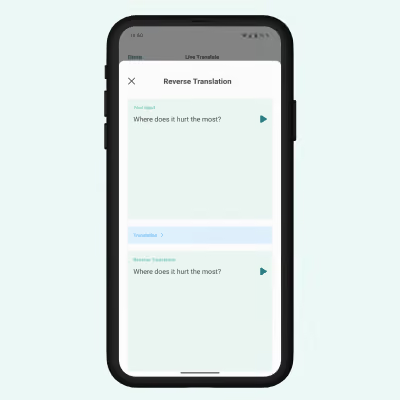
Reverse your translation back to its original language to quickly see if it matches what you want to say.
Learn moreIn our Live Translate transparency note you can learn more about how we use machine translation and AI in our translation app.
DownloadDoes Live Translate store any patient data?
No, we do not store any data (including audio, text, or translated text used in the feature) on our servers, databases, or logs, and the same is true for the translation services in use. Similarly, the translation services we use do not retain any data after processing. We do not share any translation data with third-party services.
Read more in our Live Translate transparency note that can be downloaded here.
Is Live Translate automatically available in my account?
Yes. But if you are an organization using Care to Translate you have full control over Live Translate and can enable or disable it at any time. Contact us if you want to enable or disable Live Translate in your organization's account.
How safe is Live Translate?
We prioritize the security and privacy of your data. Robust encryption and security measures protect it from unauthorized access, use, or disclosure. Furthermore, Live Translate does not store any personal or patient data and we do not share any translation data with third-party services.
Read more in our Live Translate transparency note that can be downloaded here.
Does Live Translate use AI?
Yes, Live Translate is powered by modern machine translation and speech technology, which uses artificial intelligence (AI).
Read more in our Live Translate transparency note that can be downloaded here.
When should I use Live Translate?
There are situations where the pre-defined phrases in our phrase library are too limiting, or where the patient wants to respond with something that isn’t available in the verified phrase library. This is where Live Translate serves the purpose of helping the user stay in the context where the verified phrases are still accessible, but allows free real-time translation of whatever is needed for the current dialogue. Our recommendation is to use the phrase library when you communicate sensitive or complex information. Switch to Live Translate when gathering patient responses or handling unexpected situations beyond predefined phrases.
How do you prevent AI "hallucinations" or errors?
We use a multi-layered approach to ensure accuracy:
What is hands-free mode?
Hands-free is a mode in Live Translate where instead of tapping your screen every time someone speaks, the app can now automatically listen, translate, and play the translation aloud. This allows for smoother and more natural conversations. You can easily track who said what with distinct color-coded speech bubbles for multiple participants.
What is Live Translate?
Live Translate is designed to give you more flexibility when communicating with care recipients. With Live Translate, you get real-time AI translation across 130+ languages, enhancing our existing verified phrase library. Learn more about the feature here.
RECORDED WEBINAR
Translation and healthcare go hand in hand as language barriers can hinder communication and lead to negative patient experiences. Join us as we explore this topic with guest speaker Tove Karlsson, Head of Medical & QARA, from Doctrin.