
2026-03-16
News
Speak the same language, faster.
“Can you say that again?”
In a healthcare setting, this phrase is often a sign of a significant hurdle. Before a diagnosis can be made or a treatment explained, a fundamental question must be answered: What language is the patient speaking?
While the Care to Translate app has always listed languages in both the provider’s tongue and the native script, we know that isn't always enough. Whether due to a patient's physical state or literacy barriers, identifying a language manually can sometimes feel like finding a needle in a haystack.
Today, we are thrilled to launch the first version of our Detect language feature – designed to bridge that gap in seconds.
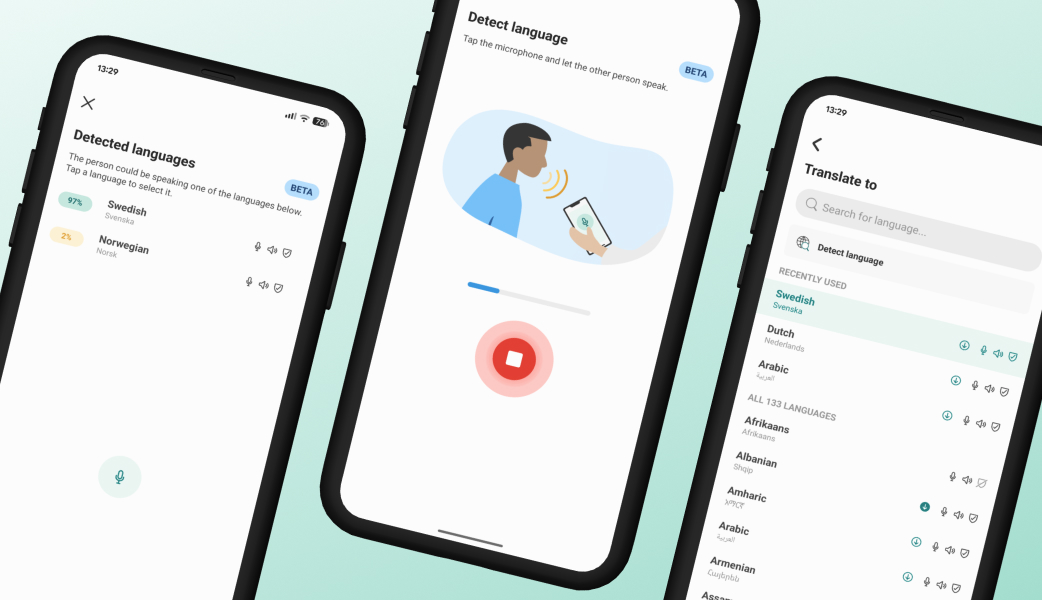
We’ve integrated this new functionality directly into your workflow. You will now find a "Detect language" button inside the target language picker.
To provide transparency, each suggestion comes with a Confidence score (e.g., 90%). This percentage represents the model’s likelihood that the suggested language is the correct one. And to keep your results clean and relevant, we automatically filter out any languages with a confidence score below 0.5%.
Our Product Strategist, Adam Särnell, sheds light on the philosophy and the technical "heavy lifting" behind this update.
"It might sound obvious, but to have a conversation, you need to know what language you should communicate in," says Adam.
"In practice, language barriers can be so vast that establishing that fundamental component is difficult. This feature makes it possible to decipher the language when the recipient might not be able to point it out themselves."
Building this wasn't just about the audio, it was about security and scale. Unlike many tools that can only distinguish between 5 or 10 "candidate languages", Care to Translate supports a vast library.
"We had to research how to host a solution that fulfills our high standards for data security while handling as many different languages as possible," Adam explains. "We’re really happy to launch this without a 'candidate language' limitation."
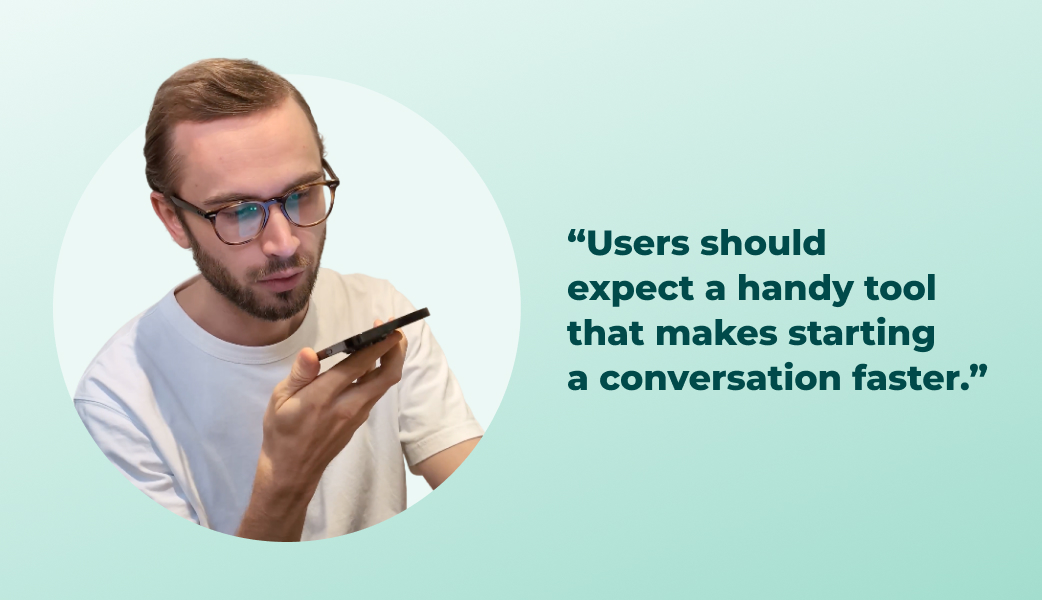
While powerful, the technology is a guide rather than a guarantee. Factors like heavy accents or a patient speaking a non-native tongue can impact results. Adam notes: "Users should expect a handy tool that makes starting a conversation faster, but they should still use the regular language list as a backup if needed."
This is just the first iteration of Language detection. As we gather feedback from care providers in the field, we will continue to refine the model.
When asked about the future of this feature, Adam’s outlook is simple: "A bright one."
Download the app and try out Language detection today.