
2026-01-14
Blog
Healthcare teams are asking one big question: “Can we trust real-time AI translation in medical situations?”
The short answer is: Yes, if the tool is built for health care.
Here’s what you need to know.
In health care, a mistranslation isn’t just inconvenient – it can affect diagnosis, treatment, safety, and patient trust. Accuracy must always come first.
Real-time translation can be safe for:
✔ Triage and symptom checks
✔ Daily care and nursing communication
✔ Instructions, education, medication info
✔ Elderly care and social care interactions
Human interpreters should still be used for:
⚠️ Consent, legal discussions, complex diagnostics
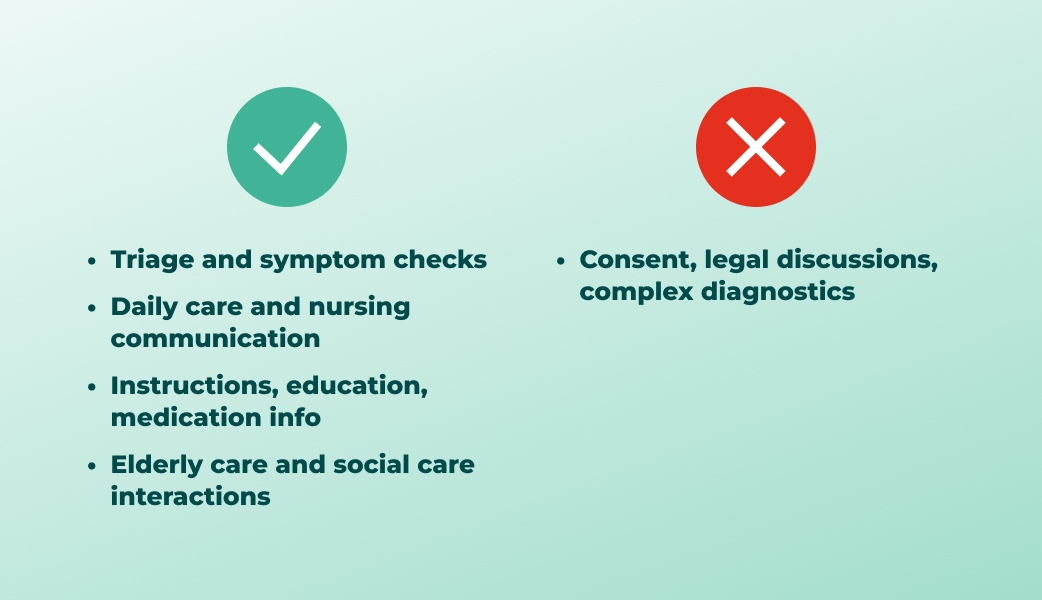
This hybrid model ensures speed, accuracy, and patient safety.
AI translation can be safe, when it’s built for health care. Tools that aren’t medically validated or compliant should not be used in clinical environments.
Care to Translate delivers:
✅ High accuracy
✅ Real-time speed
✅ Medical validation
✅ Strong privacy protection
Get started today and try real-time voice-to-voice translation.