
2026-01-19
Blog
Thoughts from our CEO, Maja Magnusson.

Recently, the magazine Cancervården published a powerful and deeply important article about digital interpretation in palliative care. It puts words to something that is far too often reduced to “technology” – when, at its core, this is about ethics, courage, and leadership.
What stays with me most is how clearly the article articulates the role of leadership in linguistically complex care encounters.
That language barriers are not an operational problem at the very edge of the organization – but a responsibility at leadership level.
In palliative care, this becomes painfully clear. Communication there is not about efficiency. It is about dignity. About being able to express fear, pain, hope, and wishes when time is short. About being seen and acknowledged as a human being.
But the truth is: this is not only about palliative care. This is about all of healthcare.
Every day, I meet healthcare organizations, decision-makers, managers, clinical leaders. And almost without exception, they already know:
And yet, many organizations still struggle to move forward.
Not because they don’t care. But because responsibility becomes fragmented. Because language is treated as a “support issue”, a “digital issue”, or a “later issue”. Because no one fully owns it.
When communication fails, it is not just information that is lost. Trust erodes. Participation weakens. The relationship itself is damaged. And at the same time, healthcare professionals carry the emotional cost – stress, moral frustration, and the feeling of not being able to provide care that is genuine, safe, and humane.
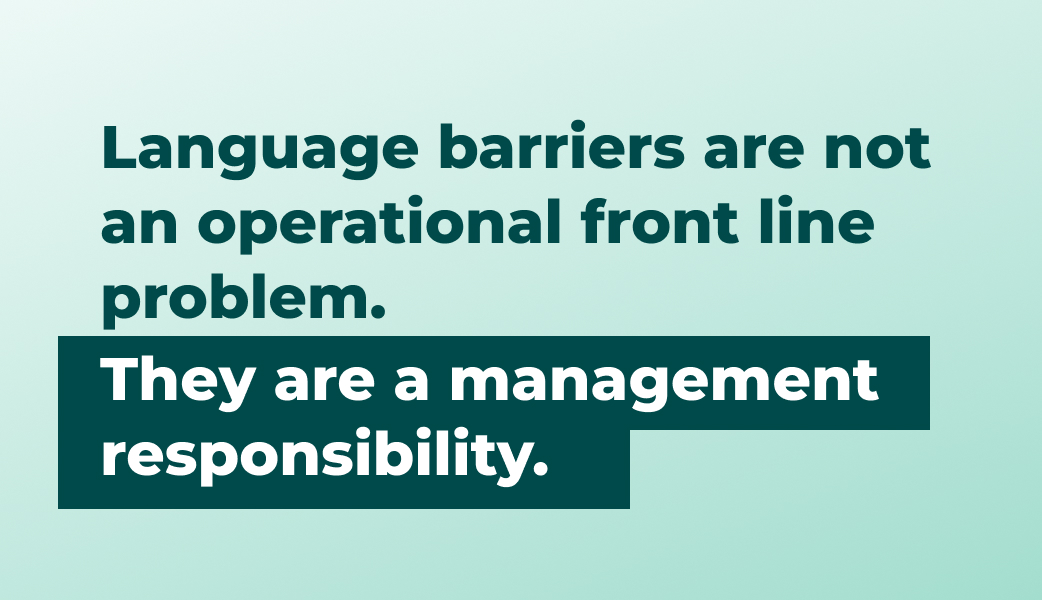
This is not a frontline failure. This is a leadership challenge.
Research is clear: language barriers affect quality of care, patient safety, equity, and work environment. But the article goes further than research statistics. It shows what happens when leadership does step in: when staff are given permission, trust, and support to use reliable, safe tools to enable human conversations.
What struck me deeply was this insight: Technology does not make care more human. Leadership does.
When leaders frame communication as an ethical cornerstone of care – not a technical add-on – something shifts. When reflection, supervision, and ethical awareness are built into linguistically complex encounters, staff dare to engage. When multilingual competence among nurses and clinicians is seen as a strategic asset rather than an informal workaround, the whole organization becomes stronger.
And when leaders give clear mandate to use safe, compliant tools designed for healthcare – instead of silently accepting risky shortcuts – technology becomes a bridge, not a barrier.
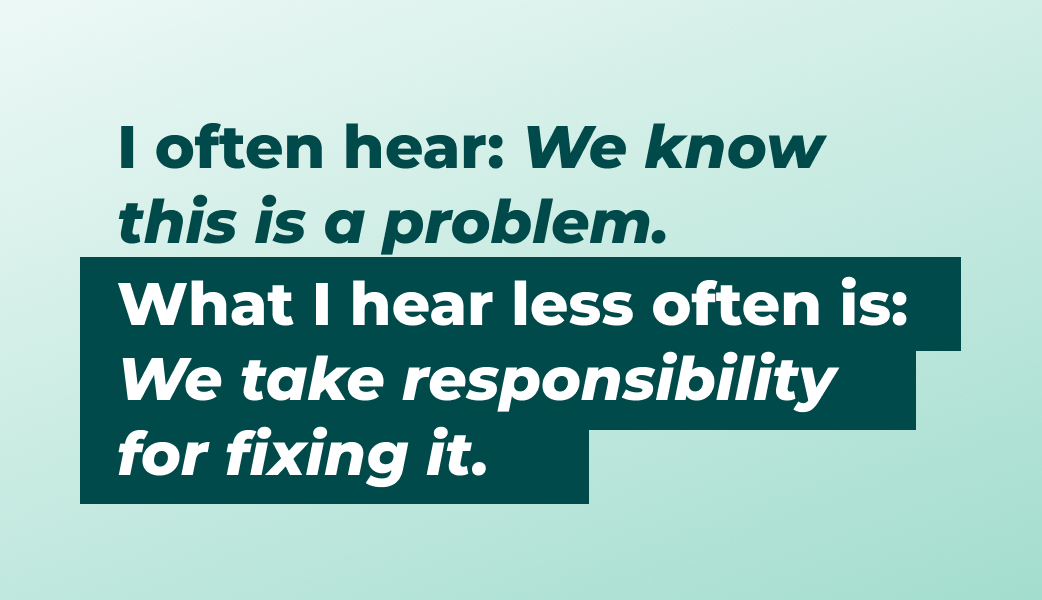
I often hear: “We know this is a problem.”
What I hear less often is: “We take responsibility for fixing it.”
Inclusive healthcare does not happen by intention alone. It requires decisions. Prioritization. Courage. Ownership.
Language access is not about perfection. The humanity in care lies not in flawless communication, but in the will to understand one another. Leadership’s role is to make sure that this will is supported by structures, tools, training, and trust – so that no one is left alone carrying the burden of making understanding possible.
If we truly believe that every person has the right to understand and be understood in healthcare, then leadership must step up – and step in.
Because when leadership enables safety and reflection, technology does not stand between people.
It supports the courage to meet.
Ready to take the responsibility? Book a demo to learn more.